The Winter Olympics Are a Reminder That You Are Not Starting Over in Midlife
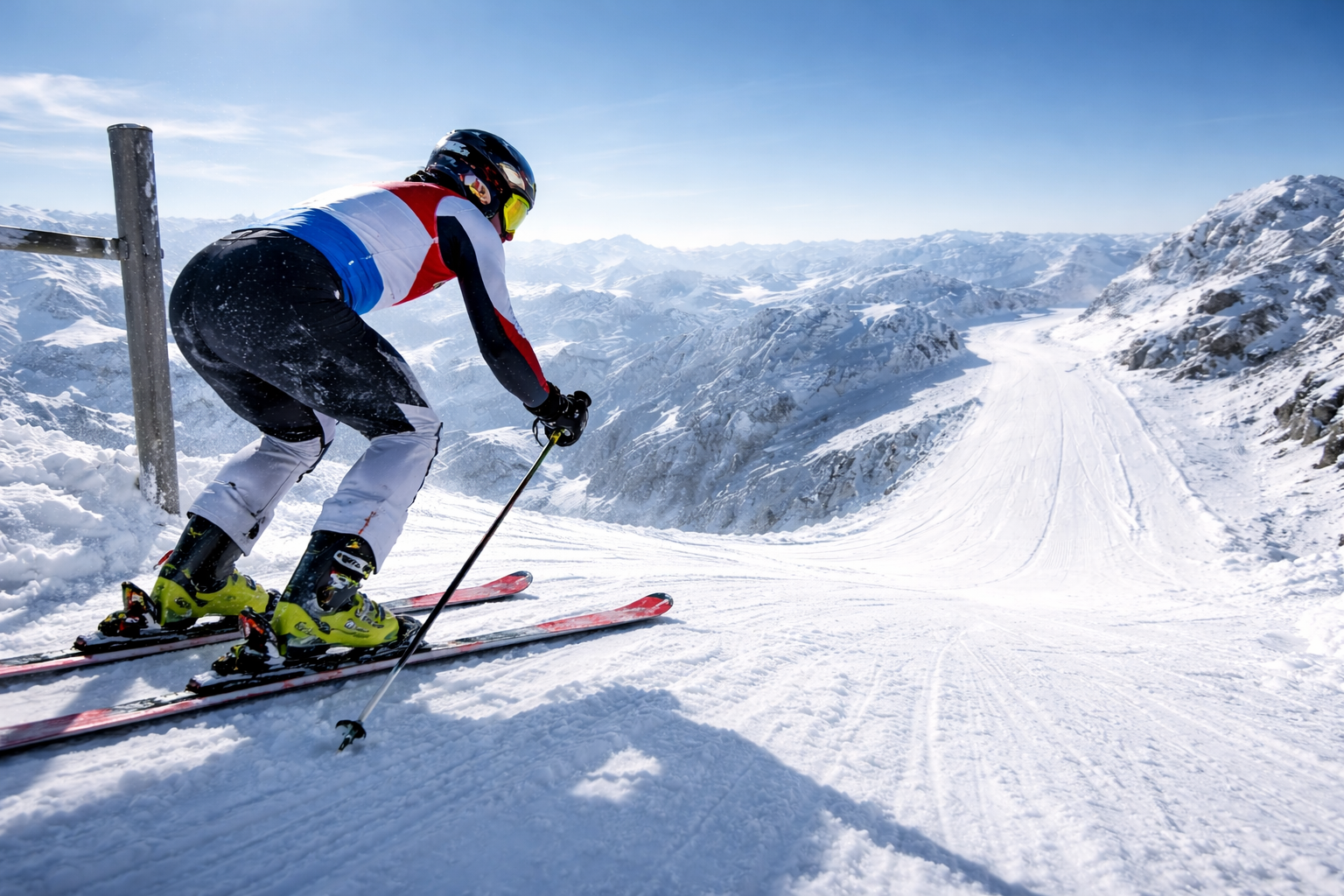
Image created with ChatGPT by the author.
I’ve never been a team sport person.
I didn’t grow up chasing tournaments or memorizing stats. I don’t follow seasons. I don’t argue about rankings. Most of the time, professional sports live somewhere outside my field of vision. Sure, there are times where I will follow the "big" games, like college and pro sports tournaments, but I've usually not been a fan following the teams up to that point.
With the Winter Olympics ending, I realize how much I watched. Almost every night. It pulls me in — not for the medals, but for the stories.
There’s something about watching a person step onto a global stage after ten or fifteen years of preparation that captures my attention. The Olympics compress a decade of effort into a few minutes. We see the jump. We see the fall. We see the score. We rarely see the mornings, the injuries, the doubt, the repetition.
That's the part that makes me think about our own transitions in midlife.
•••
The Years Behind the Moment
Every Olympic broadcast eventually tells the same kind of story.
The athlete who didn’t make the team four years ago. The one who tore a ligament and came back. The one who almost quit. The one who trained in obscurity for years before anyone knew their name.
The performance lasts minutes. The preparation lasts a decade.
In midlife — especially for those navigating a pivot — it’s easy to believe we’re starting over. A new role. A new business. A new direction. It can feel like standing at the base of a mountain with no training behind you.
But that’s rarely true.
Most of us are carrying twenty or thirty years of accumulated experience. Skills built without fanfare. Judgment sharpened through mistakes. Resilience developed in private.
The Olympics make visible what is usually hidden: mastery is layered. It compounds. It rarely announces itself while it’s forming.
One question I’ve been thinking about at the end of these games: What have I already been training for without fully recognizing it?
•••
Competing Under the Weight of Expectations
Olympians don’t perform in isolation.
They compete under national expectation. Media commentary. Social media judgment. Family hopes. Sponsorship pressure. The narrative is already forming before they ever reach the starting line.
The external noise is constant.
Watching that, I couldn’t help thinking about how many midlife professionals carry their own version of that pressure.
The expectation to stay in a stable role. The raised eyebrows when someone considers a pivot at 52. The subtle message that reinvention has an expiration date.
No one announces it outright. But it’s there.
Belief, in that context, isn’t bravado. It’s not loud. It’s not performative.
It’s the decision to continue even when the surrounding commentary suggests you should be satisfied, stay put, or shrink your ambition.
I think about the athletes who step up after a public failure. After a fall that’s replayed in slow motion. They return to the start knowing millions are watching.
Midlife pivots carry a similar version of that risk. There aren't actual cameras filming our every move, but the feeling of being watched, and maybe judged, is still there.
Where in your life are you waiting for external approval before you move?
•••
Individual Style Inside Structured Systems
The Olympics are highly regulated. Rules. Scoring systems. Technical requirements.
And yet, within that structure, individuality still shows up.
A figure skater chooses music that reflects his or her cultural roots, or develops a skill earning a nickname like "Quad God". A snowboarder invents a new variation of a trick. A speed skater competes with visible emotion rather than rehearsed composure.
They are competing inside a system. But they are not erased by it.
Many of us have spent decades inside systems — corporate hierarchies, institutional frameworks, family roles. The rules were clear. The metrics defined. The expectations often unspoken but powerfully present.
That structure is important in building discipline and capability.
But eventually, many people reach a point where the question changes.
Not “How do I advance here?” But “Who am I within this?
Or even more directly: Who am I if this role no longer defines me?
Authenticity at midlife isn’t about dramatic reinvention. It’s often about subtraction. Removing what was adopted for survival or approval. Keeping what remains when the title is gone.
The athletes who stand out at the Olympics aren’t only technically strong. They look like themselves. You sense coherence between the person and the performance.
That coherence is compelling.
•••
The Discipline of Belief
One of the more striking realizations watching elite athletes is how unromantic their preparation is.
It’s not inspiration. It’s repetition.
Drills. Conditioning. Refinement. Review. Rest. Repeat.
Belief, for them, is built on evidence. Evidence built through consistent action.
In midlife, belief often feels abstract. We talk about confidence. Clarity. Purpose.
But those aren’t personality traits. They are byproducts.
Confidence grows when we accumulate proof. Clarity grows when we test ideas in motion. Purpose strengthens when we commit to something long enough to see its impact.
The athletes we admire aren’t waiting to feel ready. They train. And through training, readiness increases.
Where in your own life are you waiting for confidence before you begin — rather than allowing action to generate it?
•••
After the Flame Goes Out
The Winter Olympics ended Sunday.
The ceremonies close. The coverage fades. The athletes return home — some with medals, some without.
What remains isn’t the podium shot. It’s the arc.
Long preparation can lead to a visible moment. Failure doesn’t disqualify future attempts. Style and discipline can coexist. Belief is persistence practiced over time.
I’ll likely return to my usual distance from sports until the next major competition. But I won’t forget what these weeks clarified.
Most of us are in the middle of something. A transition. A reconsideration. A recalibration.
We may not have a stadium or commentators. But we do have accumulated years behind us.
Those years are not baggage. They are training.
You are not starting from zero. You are building from experience.
Belief, at this stage of life, is trusting that what you’ve already built is enough to begin again.