Albert the Artist Never Left
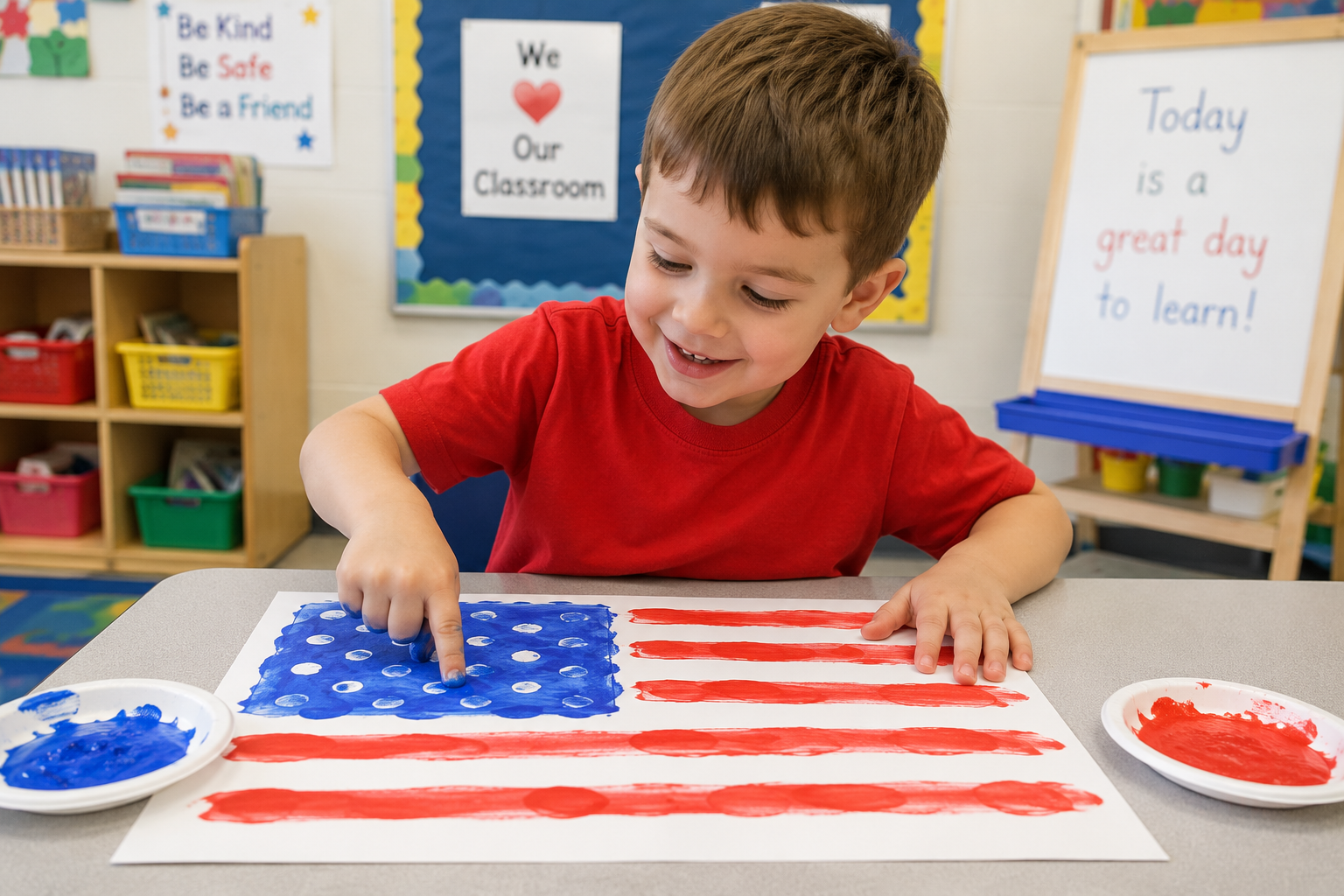
Image created with AI by the author.
There are several things open on my worktable right now.
Two sketchbook kits waiting for me to try the tools in them a second time. A linocut illustration waiting to be transferred to the block. Watercolor supplies and pens begging me to start drawing. And in my head, a growing list of things I want to try in Procreate — a drawing app on the iPad that can mimic almost any traditional medium — once I actually sit down and learn it.
I leave for vacation tomorrow. Two weeks away. Nothing will get done.
And I am, inexplicably, stressed about this.
I say inexplicably because none of these things have deadlines. No one is waiting. There's no client, no show, no publication date. Just me and my worktable and the distinct feeling that I am somehow already behind.
I've been trying to figure out what that feeling is actually about.
The easy answer is that I'm scattered — too many projects, not enough focus, the classic trap of someone who has more ideas than hours. That's true as far as it goes. But it doesn't explain why a two-week vacation feels like an interruption to anything. You can't interrupt something that has no deadline. You can only interrupt something that matters.
So apparently this matters. I just wasn't sure why until recently.
•••
I was known as Albert the Artist as a kid. Not a nickname I gave myself — it was given to me, which is a different thing. In my teens I was identified as artistically gifted. When I got to college and started in computer science, I switched to the art school once I learned about commercial art. I wanted to be somewhere that felt more like me.
Art has never not been part of my identity. It just got crowded out slowly, quietly, in the way that things do when life fills in around them.
I held onto my art supplies from school. Brushes, inks, a few half-used sketchbooks. Over the years I occasionally bought more — a set of watercolors here, some decent pens there — then packed them away again with the same vague promise: until I have more time. Those supplies lived in boxes through apartments and moves and thirty-five years of a career, waiting for a version of my life that had more room in it.
A career at the intersection of design and technology gave me a version of creative work, but it was creativity in service of systems and products and other people's visions. The hands-on, imaginative part — the part that made a kid want to be called Albert the Artist — slowly disappeared into management and process and deliverables. Not because I left it. More like it got buried under the weight of everything else that needed doing, while the supplies sat in their boxes and waited.
Retirement cleared the weight.
For the first time, I have real time — open mornings, no commute, no calendar full of other people's priorities — to make things purely because I want to make them. No justification required. No asking whether it's practical. And what I've found is that the desire is exactly where I left it, as strong as it ever was, maybe stronger for having been set aside so long.
So I'm not claiming a new identity. I'm just finally allowed back into an old one.
•••
Which makes the urgency harder to explain away.
I have a long history with photography — years of it, thousands of images, showing publicly in Chicago. What made it feel like it meant something wasn't only the craft. It was that the work existed outside my own head. Strangers stopped in front of something I made and actually felt something. The image had a life beyond my hard drive, beyond my intentions for it. That's what I want to build again — not the attention exactly, but the proof that the work landed somewhere real.
The projects on my worktable aren't there yet. They're ideas ready to be executed, not evidence of anything. And somewhere in the back of my head, that gap is keeping score.
•••
That's the experiment I'm actually running — less about what to focus on in any productivity sense, and more about what kind of making feeds me most right now. The resistance of a lino block, cutting away everything that isn't the image, the moment you press it and lift the paper and see what came out — there's no undoing any of it. Whatever it is, it's what it is. Watercolor has that same quality: the paint going where it wants to go, the happy and unhappy accidents.
Procreate is almost the opposite. Infinitely forgiving, every mistake erasable, every direction changeable. I want to learn it too — not as a fallback, but because the freedom to experiment without burning through supplies appeals to me, and work that lives natively in digital form is easier to put out into the world. Different itch. I'm still figuring out which itch is which. Maybe that's the point of the experiment.
•••
Before I leave, I'm going to finish this post and have the next one ready for when I get back. The art projects are at stages where my next move is clear. I'll have completed something before I go.
It's not a body of work. Barely a data point. But it's proof that the gap between who I've always been and what I can show for it is closeable — one finished piece at a time.
The supplies waited thirty-five years in their boxes. Two weeks is nothing.