I left with a plan. Now I'm running experiments.
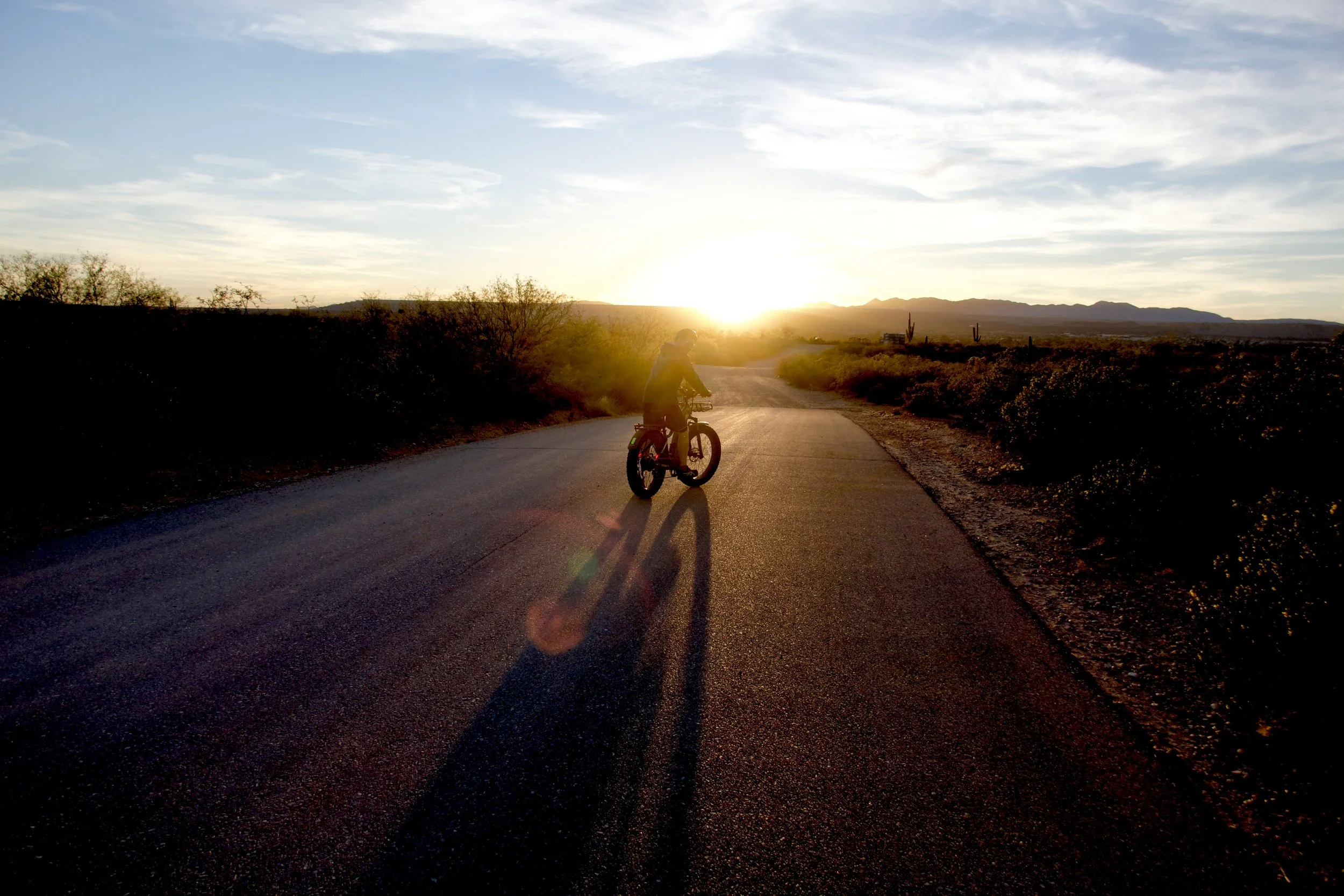
Photo by the author.
I left my job with a plan.
Three pillars. Coaching, AI consulting, creative work. I had thought it through, written it down, and told people about it. I was intentional. I was clear. I was ready.
That was about six weeks ago.
Here's what I know now that I didn't know then. A plan built on logic isn't the same as a plan built on truth. Mine was logical. It made sense on paper. It was practical and honestly, reflected how I plan things. Three income streams, three distinct audiences, one person running it all. Clean and tidy.
I was excited to have a plan, but then things got interesting.
The first few weeks, I pushed through. I told myself I needed time to settle in. That any discomfort I had was just me getting used to the new “norm”. But the feeling didn't go away. I started to feel more in my gut that something wasn’t clicking for me with this plan. Certain parts energized me. Others felt like obligation. This was a moment of intuition for me. Something didn’t feel right.
So I've been rethinking the whole thing. Not as a failure. As data.
A former colleague of mine at Zoro was a big believer in experimentation. His version was technical, but the principle was the same. Run more experiments. Learn faster. Don't fall in love with a hypothesis just because you built it. Look at what the results are telling you and adjust.
That's where I am now. Six weeks in, and I'm adjusting.
The AI consulting piece went first. Not because it failed, but because every time I thought about “consulting”, it felt like another job. I realized I didn’t want that. I want to keep learning it for myself and sharing what I learn with others when it makes sense, not as a consulting gig.
The coaching piece is still running. People are reaching out, friends mostly, frustrated with job hunting and not sure what to do next. There's a real need there, and I think I can help. So I'm letting that one play out a little longer before I decide anything.
What I keep coming back to is the creative work. Design. Photography. Art. Making things and putting them into the world. That's the part that doesn't feel like work. It’s where I feel the strongest pull. And it’s the area of my life that was always sidelined for work priorities. My nickname as a kid was “Albert the Artist” and I now want to own that in every sense!
The experiment worth doubling down on
In coaching, we often ask someone what they would do if income wasn’t the immediate pressure. The answer often provides someone’s true passions. I’ve been asking myself that lately, because income isn’t a pressure. I’m retired. I’ve planned for this. I’m prepared.
The answer comes back the same every time. Make things.
Recently I took on a small volunteer design project for a local desert garden. They needed a sign for an outdoor display. I loved doing it. It was my first volunteer design project since moving to Arizona. It’s something I intend to do more of, most likely with this same garden, which happens to be a short drive from my house.
A benefit I’ve always received from volunteer design work is appreciation for work that is doing good in the world. Organizations that can’t afford expensive design services give me so much flexibility in pursuing design options and are grateful to work with someone. I love being able to help through the enjoyment I get just in designing
This is the kind of work I want to do more of.
Design work. Photography. Art.. These are things I can put into the world and let stand on their own. I had an Etsy shop once. I want to open another one. I want to publish more work online. T-shirts, prints, digital downloads. Creative work that doesn't require me to be available to another person on a schedule.
That matters more than I expected it to. Coaching is relational. It requires my presence, my attention, and my energy directed outward. Creative work is different. It requires presence too, but the conversation is internal. Me and the work. That's the part I've been missing.
I'm not anti-social. But I'm learning something about how I'm wired. The work that restores me is more solitary these days. The work that drains me now more than it used to, even when I'm good at it, involves managing other people's emotions and expectations for extended periods. After 35 years of collaborative work, of triads and meetings and stakeholder reviews, I’m less energized by it than I was at 35. I'm not running away from people. I'm running toward something that fits better with where I am today.
That’s important for me to keep in mind or I fall into my “corporate” ways when I don’t need to anymore.
There's also something about making things with your hands, or your eye, or your design sense, that doesn't translate easily into words. When I'm working on a photograph or a design, time moves differently. I'm not watching the clock. I'm not managing anyone's anxiety. I'm just in it. It’s often called “flow”. It’s something I experienced often in college when I’d go into a darkroom to process film and prints, leaving 6 hours later thinking I’d only spent an hour in the dark. It's worth building a life around things that make me so invested, time slows..
So the next round of experiments looks different. Less about building services for others. More about building a creative practice that could eventually sustain itself. Slower, maybe. Less predictable, definitely. But more aligned with what I actually want this chapter to feel like.
There’s no pressure or deadline in this. I have to keep reminding myself of that. I can turn on retirement funds now if I want to, but it’s a game for me to see how long I can delay needing to do that. The savings I prepared for this post-career time is my research budget. Time to run experiments without needing every one of them to pay off immediately.
The goal isn't to succeed at everything I try. The goal is to learn something useful from each attempt, fast enough to run a better experiment next.
What this means if you're figuring it out too
If you left a job, or lost one, or are thinking about leaving, you probably did what I did. You made a plan. You thought it through. You told people.
And then life inside the plan felt different than the plan looked on paper.
Don’t look at it as failure, because it’s not. What you thought was a solid plan was an experiment that is best adjusting to with learnings than forcing into place.
The problem with big transitions is that we treat them like decisions instead of processes. We think we have to get it right at the start. We announce our intentions, we commit publicly, and then we feel stuck honoring a plan that no longer fits because we already told everyone about it.
But what if you treated the whole thing as an experiment instead?
Not a hobby. Not a lack of seriousness. An actual experiment. With a hypothesis, a timeline, and honest criteria for what success looks like. And when the results come in, you look at them clearly and decide what to do next.
Some experiments will surprise you. Some will confirm what you suspected. Some will be done in six weeks. That's not quitting. That's science.
Here's what I've found helpful. Before you start something, decide in advance what you're trying to learn from it. Not just whether it makes money, but whether it fits.
Does it restore you or drain you?
Does it require you to show up in ways that feel natural or ways that feel forced?
Give yourself a reasonable timeline, maybe 60 or 90 days, and then actually look at the results. Honestly. Without defending the hypothesis just because you built it.
That kind of honest assessment is harder than it sounds. We get attached to our plans. We've told people. We've invested time. But sunk cost is a terrible reason to keep running an experiment that's already given you its answer.
I'm also noticing something about coaching specifically. The coaches who seem to thrive long-term tend to do executive coaching. Deeper work, fewer clients, longer engagements. The project I'm working on now, helping people navigate job hunting, may be a one-and-done. And that's okay. It means coaching becomes a smaller part of what I do, not the main pillar everything else points back to. That's a healthier fit for where I'm headed.
For me, the experiment running right now is simple. Can I build a creative practice that sustains me, and eventually sustains itself? I don't know yet. But I know it's the right question to be asking at 59, with some runway and a clearer sense than ever of what actually restores me.
You don't have to have it figured out. You just have to be willing to look honestly at what the results are telling you
That's enough to start.
If this connects with where you are right now, I'd love to hear about it. Reach out and let's talk.