Intentions, Not Resolutions
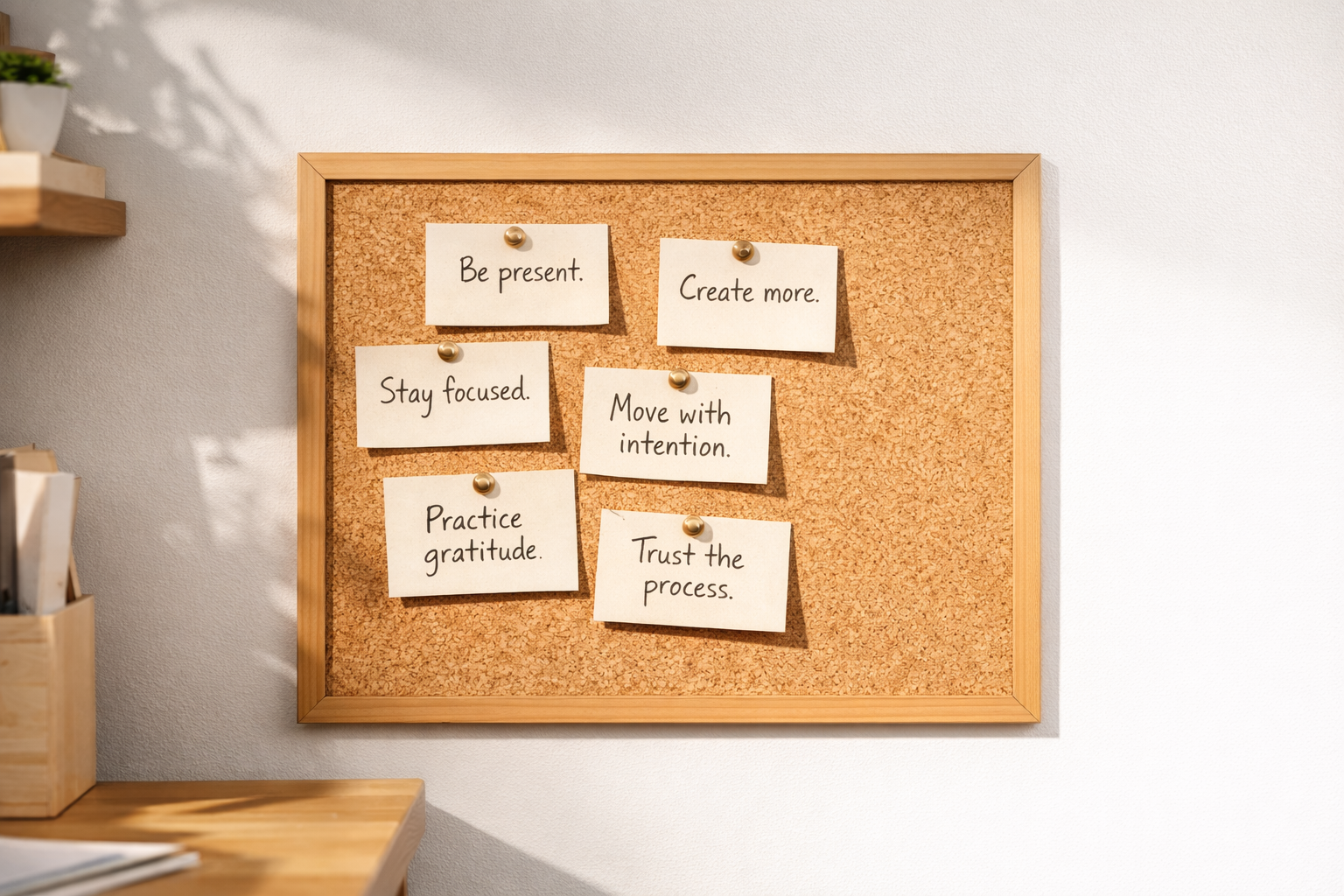
Image created by the author with ChatGPT
As we step into 2026, I want to share something I’m doing that’s making a big difference in how I approach the new year.
In my last post, I talked about mind-mapping the year ahead. I sit down and sketch out the big areas of my life that matter most. Nothing rigid or overly structured. Just a way to see the whole picture in one place. I’m revising it this year and also finding another use for it.
That mind map has become my starting point for the year for setting intentions, not resolutions or goals. Once I changed my mindset to one of intentions rather than resolutions I saw a new way to look at the year ahead.
•••
From Resolutions to Intentions
For a long time, I approached January the way a lot of people do. I made resolutions.
They usually sounded familiar. Work out more. Eat better. Be more productive. Lose some weight. Get organized.
There’s nothing wrong with those goals. In fact, they’re reasonable. They come with clear metrics, which can be motivating. You either did the thing or you didn’t. You hit the target or you fell short.
But over time, I noticed how those resolutions landed for me. They felt rigid and too much like work, rather than something motivating.
Once you frame something as a goal, there’s a finish line baked in. You’re moving toward something specific, and when you get there, the effort often stops. Or, if you don’t get there, the whole thing can feel like a failure, even if meaningful progress happened along the way.
What I cared about more than the goal itself was what happened underneath it. The habits. The behaviors. Whether the change was something I could actually live with over time.
That’s where intentions started to make more sense for me.
Intentions feel less like targets and more like direction. They don’t demand perfection. They don’t assume a straight line. They’re about choosing a way of moving through your life that you want more of.
I still care about outcomes. I’m not anti-structure. But intentions give me a frame that feels more humane and more sustainable.
•••
Grounding Intentions in Core Values
When I look at my mind map this year, I see similar areas showing up as ”important” to me, repeated from past annual reflections and my last mind map.
They’ve been there for years. They’ll probably be there next year too.
Creativity is one of those areas for me.
I’ve always thought of myself as a creative person, but for a long time that identity lived more in theory with limited practice. I talked about creativity. I admired other people’s work. I told myself I’d get back to it when things slowed down.
At some point, I had to admit that if creativity really mattered to me, it deserved more than lip service.
So instead of setting a goal like “make more art,” I framed an intention around developing my creative life in a more consistent way. That meant looking for ways to participate in local arts groups, connect with other creative people, and actually make space for my own work.
My intention for 2026 is consistency, enough that creativity becomes something I am doing, not just something I say matters.
That’s the difference for me. These intentions aren’t random. They’re rooted in values that keep resurfacing year after year. Because of that, they don’t need a lot of adjustment. They evolve naturally as my life changes.
•••
The Reality of Execution
Here’s something I readily admit about myself.
I’m very good at beginnings.
I love starting things. I get energized by new ideas and fresh starts. The beginning of the year is no exception. I’m motivated. I’m clear. Everything feels possible.
Execution is harder. I get bored, ready to move on to the next thing.
That’s not unique to intentions. It’s true for projects, habits, and pretty much anything that unfolds over time. The excitement fades. Life fills in the gaps. Good ideas drift unless something keeps pulling them forward.
I’ve learned that setting intentions once in January isn’t enough for me. If I want them to shape how I actually live my days, they need to stay visible.
That’s where ritual comes in, though I don’t mean anything elaborate.
•••
Keeping Intentions Alive
I keep my mind map as a kind of big-picture reference, but for individual intentions, I make them tangible.
Sometimes I write them out on simple notecards. Sometimes I buy business card sheets for my printer and print them so they’re easy to carry around. I’ll make a couple of sets. One for my desk. One for a notebook. Sometimes I keep a list on my phone too.
The format doesn’t really matter. What matters is that they’re easy to access.
When my intentions are visible, they stay active. They don’t disappear into a notebook I never open or a document buried in a folder somewhere.
I’ll glance at them during the day. Not in a dramatic way. Just a quick check-in.
And they begin to stay top of mind for me when I’m faced with any kind of decision.
•••
Intentions as a Decision Filter
One of the biggest benefits of keeping my intentions close is how they help with decision-making.
When I’m faced with a choice, big or small, I can use those cards as a reference point. I can ask myself whether what I’m about to say yes to actually supports the direction I said mattered.
If I set an intention to make 2026 my healthiest year yet, I can remind myself of that the next time I’m faced with a food decision or debating going to work out. Yes or no answers each affect support of my intention.
Sometimes the answer is no. Sometimes it’s a clear yes. Sometimes it’s more complicated.
But having that reference makes the decision feel less abstract. It gives me something to measure against that isn’t just urgency or habit.
In that sense, my intentions act like a compass. They don’t tell me exactly where to go, but they help me orient myself when things feel unclear.
•••
Daily Intentions as a Companion Practice
Alongside these yearly intentions, I also practice something smaller.
A meditation teacher I follow talks often about setting an intention for the day. Not a to-do list. Not a goal. Just a way of choosing how you want to show up.
I’ve found that daily intentions pair well with yearly ones. The yearly intentions set direction. The daily ones help me live into that direction, one day at a time.
Some days the intention is simple. To be patient. To stay present. To move a little more slowly. It doesn’t replace planning or structure. It grounds it.
•••
When Things Drift
There are moments during the year when I realize I’ve drifted. The intentions are still there, but they’re not front of mind.
I don’t treat that as failure anymore.
Instead, I treat it as information.
I’ll pull out the cards. Look at them again. Maybe jot a few notes. Often the issue isn’t that the intention is wrong. It’s that something else has quietly taken over my attention.
Because these intentions are tied to core values, they usually still fit. They just need to be brought back into focus.
•••
An Invitation for 2026
As you head into 2026, I’m not suggesting you abandon goals or metrics entirely. They have their place.
I am suggesting a different starting point.
Instead of asking what you want to accomplish this year, try asking what you want to build more of. What qualities, habits, or ways of being feel worth investing in.
A famous quote often attributed to Socrates is:
”The secret of change is to focus all of your energy not on fighting the old, but on building the new.”
Choose a few. Keep them simple. Anchor them in what keeps showing up for you year after year.
Then find a way to keep them close. On your desk. In your notebook. On your phone. Somewhere you’ll actually see them when decisions show up.
Let them guide you. Not as rules, but as reminders.
That small switch has changed my approach to 2026.