The Smallest Change That Can Still Change Everything
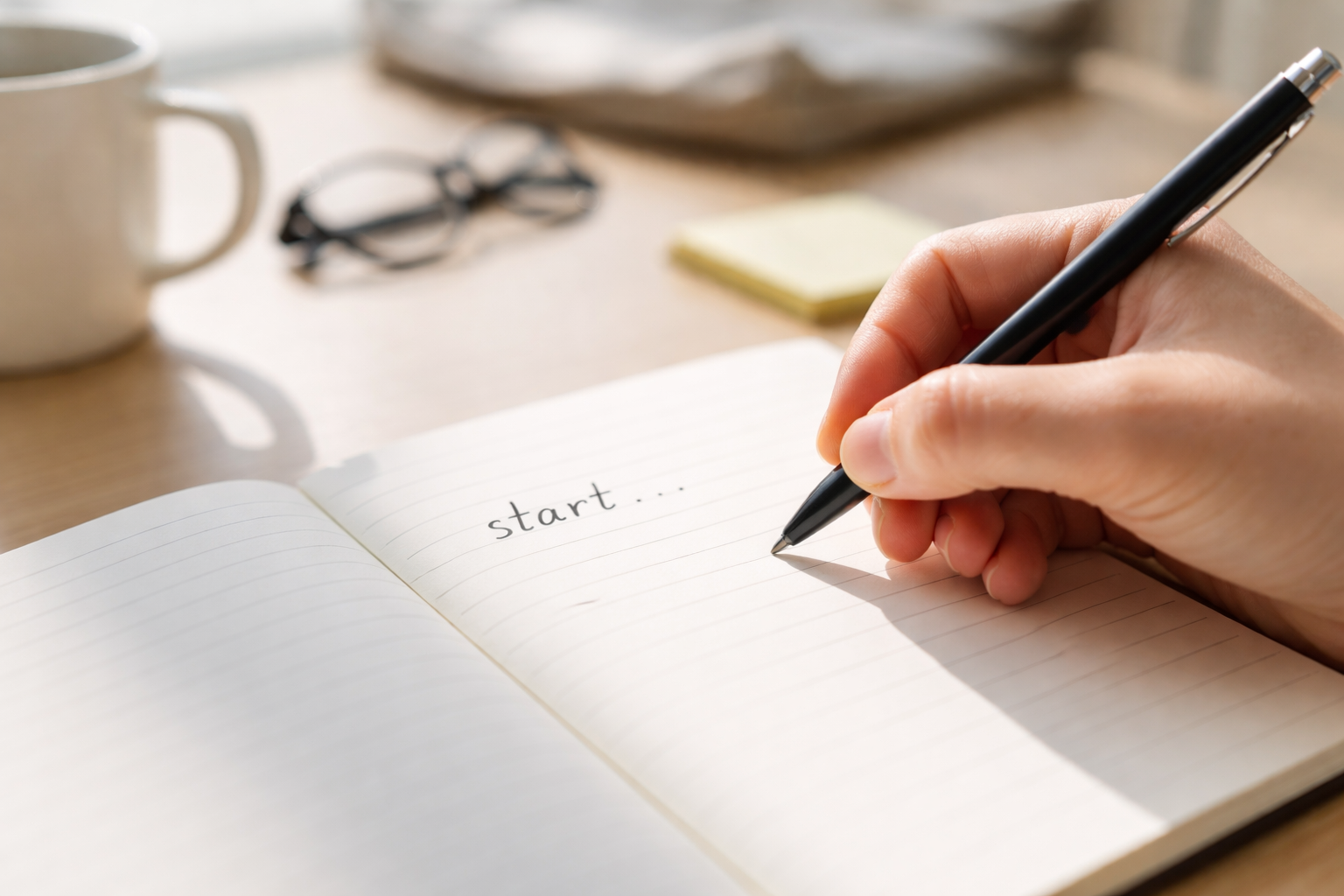
Image generated by the author with ChatGPT.
January carries a lot of expectation.
New year. Clean slate. Fresh start.
Even if you try to ignore it, the cultural noise is hard to miss.
Big goals. Bold plans. Pushes to reinvent yourself everywhere you look.
I feel it every year, and my recent blog posts talk about how I'm approaching the new year differently. It's all pretty exhausting, and I often think:
"I want change, but I do not have the energy for a total overhaul."
So, what are we supposed to do within our energy limits to affect change?
Wanting something new does not mean you need to blow up your life to get it.
•••
The Pressure to Start Big
January often sells us a particular story.
If you are going to change, you should go all in.
New habits. New routines. New identity. Preferably all at once.
That's strong motivation, but it often creates the opposite effect. It turns a fresh start into a performance—one more thing you are supposed to do well.
For people in midlife, this pressure is a little different.
We are not starting from zero.
We have responsibilities, history, fatigue, wisdom, and context.
Starting big can feel less like excitement and more like another demand.
•••
Why Most Fresh Starts Fail
Research on behavior change shows that motivation spikes around temporal landmarks like January 1.
Psychologists call this the fresh start effect.
It is real, and it is short-lived.
The problem is not a lack of desire, but a design issue.
When change relies solely on willpower and ambition, it collapses as soon as real life pushes back.
A busy week.
A sick parent.
A dip in energy.
A moment of doubt.
Most fresh starts do not fail dramatically.
They fade quietly.
The gym visits slow.
The journal gathers dust.
The new plan becomes another unfinished promise.
If you already frequent a gym regularly, you've felt the onslaught of new members after the first of the year and have watched the herd thin over the coming weeks and months.
•••
The Power of Starting Smaller Than You Think
The smaller the starting step, the more likely change is to last.
Small actions reduce resistance.
They fit into real life.
They allow learning instead of pressure.
They also shift identity.
When you repeat something manageable, you begin to see yourself differently.
Not as someone trying to change, but as someone already in motion.
I've read many times to stop thinking about "who I want to be" and think:
"I am ____"
Instead of thinking "I want to be a healthier person," think and say:
"I am a healthier person."
Framing the present in a positive way, rather than a future state, strengthens our mindset to become what we want.
•••
Step 1: Name the Change You Actually Want
Before choosing what to do, slow down and ask a deeper question.
What do I actually want to be different by the end of this year
The experience, not the habit.
More calm.
More creative space.
More connection.
More energy.
Write it down in plain language with one or two sentences.
This could include areas you've defined from your mind map or intentions work for the year.
This step matters because many people chase habits that do not match what they truly want.
When the desire underneath is unclear, motivation evaporates.
•••
Step 2: Design the Smallest Possible Experiment
Now take that desired change and shrink it.
Ask yourself:
"What is the smallest version of this I could try for the next two weeks?"
If you want more calm, try two minutes of breathing before opening your laptop.
If you want more creativity, write one paragraph every other day.
If you want more movement, it might be a five-minute walk after dinner.
This is not about discipline.
It is about lowering the cost of starting.
•••
Step 3: Anchor Change to Real Life
Small change works best when it builds on something already in motion.
Instead of: "I will meditate daily,"
try: "After I pour my morning coffee, I will sit quietly for two minutes."
Instead of: "I will journal every night,"
try: "When I close my laptop, I will write one sentence."
Anchors matter because they remove decision fatigue.
You are not asking when or if.
You are linking new behavior to existing rhythm.
This practice of linking new habits with existing ones is something Jame Clear calls habit stacking in his book "Atomic Habits".
It's a practice I took from the book and have successfully applied many times for simple changes I've wanted to make.
This respects the reality of midlife schedules rather than fighting them.
•••
Letting Small Changes Reshape Your Year
Here is what often happens when people commit to small, intentional change:
They stop negotiating with themselves every day.
They build trust.
They gain clarity about what actually works for them.
Momentum builds sideways.
Not through intensity, but through consistency and self-respect.
Over months, small changes reshape how you spend time, what you say yes to, and how you relate to your own life.
That is how real fresh starts unfold.
An Invitation for the New Year
If you are standing at the beginning of a new year wanting change that feels honest rather than exhausting, you do not have to figure it out alone.
I work with midlife professionals who want to make intentional shifts without burning everything down.
If you are curious about exploring what a smaller, truer fresh start could look like for you, I would be glad to talk.