Why Your Comfort Zone Needs a Little Pressure
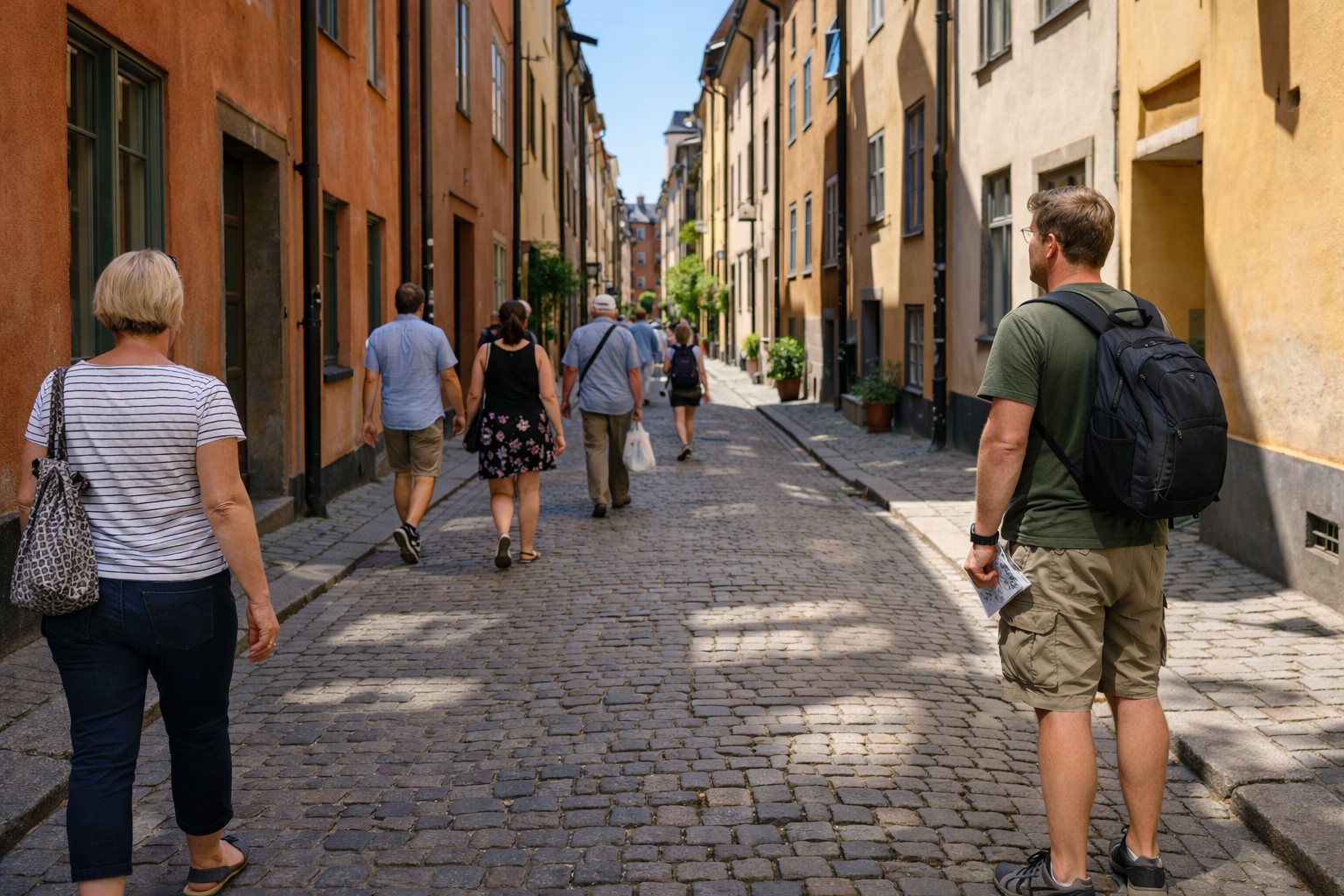
Image created by the author with ChatGPT.
There’s nothing like being outside your comfort zone to wake you up.
It might be small: trying to decipher a gelato flavor in Sweden or following the sounds of a festival until you find yourself at a Maypole celebration you hadn’t planned to attend. Both of these happened to me on a visit to Stockholm.
As my husband and I wandered outside the tourist area, we entered the locals’ space and a little café that had gelato. Rather than choosing a flavor we could understand from its spelling, my husband decided on one that looked interesting, but we had no clue what it was. This turned into an “all hands on deck” moment as many in the small café started working with us to understand the flavor. It was a funny moment that we still talk about more than 10 years later!

Gelato in Stockholm. Delicious after all the work! (I don’t remember the flavors, but would guess the dark one was mine and was anise or black licorice.)
It might be bigger: speaking Spanish for a whole day in Mexico despite being far from fluent. For me, these moments often happen while traveling, especially when I don’t speak the local language. I’m not just out of place geographically—I’m disoriented, unsure, and hyper-aware of everything happening around me. It’s uncomfortable. It’s also unforgettable.
This is part of why I love travel. It drops me into situations where I’m forced to adapt quickly. I have to listen more carefully, pay closer attention, and let go of the need to know exactly what comes next. Whether I’m trying to order food or figure out where I am, I can’t coast. I’m fully engaged. And that feeling—of being alert, responsive, alive—is often what people are after when they say they want to “grow.”
Of course, you don’t need a passport stamp to leave your comfort zone. For some people, it’s a physical challenge—running farther, lifting heavier, climbing higher. For others, it’s sitting down to a meal they’ve never tried, or starting a conversation they’d usually avoid. What counts as a stretch varies. But the experience is often the same: discomfort, doubt, and maybe a flicker of curiosity about whether we can actually do this. And then, sometimes, we do. The border of what’s familiar moves, and suddenly, our comfort zone has grown.
That expansion is the real benefit. It’s not about collecting brave moments. It’s about becoming someone who’s less rattled by the unknown, more confident in your capacity to adapt, and a little more willing to take the next leap—whatever that looks like.
Still, it’s worth asking: what stops us?
Fear, mostly. Fear of looking foolish, fear of failing, fear of confirming some private suspicion that we’re not good enough. But often, the fear shrinks once we’re actually in the moment. The anticipation is worse than the reality. And if we can remind ourselves of past times we’ve succeeded, that fear starts to lose its grip.
So here’s a practical thought: don’t wait for life to shove you out of your comfort zone. Push it yourself. Start small. Choose something unfamiliar this week—a different lunch spot, a tougher workout, a call to someone you’ve been avoiding. Notice what comes up. And then pay attention to what happens after.
Wherever your edge is, touch it. That’s how it moves.
What’s one small way you could push your comfort zone this week? Write it down—and do it. Then ask yourself: what did I learn, and what shifted in me?