What a Spanish Plaza Taught Me About Presence
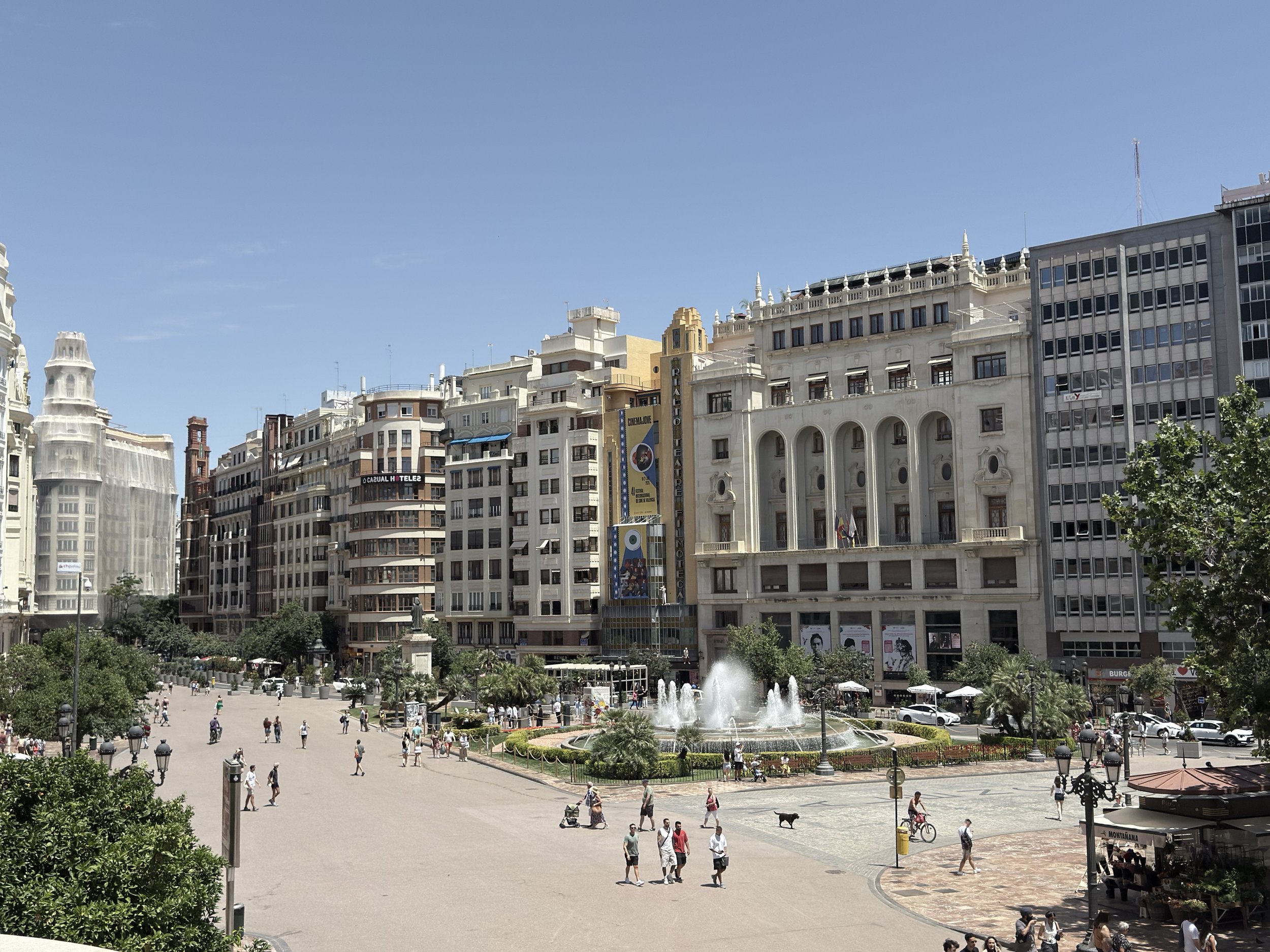
Plaza del Ayuntamiento in Valencia - photo by the author
I looked out from the stone balcony over the entire plaza - the fountain, the gothic facades, the colonial columns, all the people milling about. That was my view of Plaza del Ayuntamiento in Valencia and home of the City Hall, from whose balcony I stood. Below me was a prime example of much of what I experienced in Spain.
Walking through the plaza at ground level brought us to the main City Hall building where we saw people hanging out on the huge stone balcony overlooking the plaza. We headed inside to see what was accessible and found ourselves up on the balcony looking over the entire plaza. It was a remarkably calm scene with people walking through, enjoying the space, the fountain, the hellos of passersby. It was the kind of space you don’t see much of back in the U.S.
I had left for this trip stressed. My last post was about that — the worktable covered in half-started projects, the linocut waiting to be transferred, the watercolor supplies, the growing list of things I wanted to try in Procreate. I was leaving for two weeks and nothing would get done, and I felt, inexplicably, behind. There are no deadlines on any of it.
Two weeks in Spain, and I didn't think about any of it once.
Not surprising for me when it comes to travel. I switch gears mentally and really set aside whatever was happening before I left. There's something about landing in a country that has been doing this for about two thousand years longer than yours. The urgency you brought with you doesn't survive the first morning.
Part of what did it was simple displacement. Travel breaks the rhythm that produces that kind of low-grade pressure. You can't check projects from another continent. I guess you could, but who wants to hop online with this kind of scenery! I've traveled domestically and don’t always feel the same switch. There's something that happens when you leave the country — especially a country as young as the U.S. — and land somewhere that has been doing this a lot longer. The scale of what was there before you arrived changes something about what felt important to you back home.
Valencia's old town has buildings that predate the United States by centuries. The cathedral in the plaza opened in 1262. The gothic arches weren't designed to impress tourists; they were built to house a community's religious life across generations that couldn't have imagined what would come after them. You walk through that and your project timelines start to seem a little overwrought.
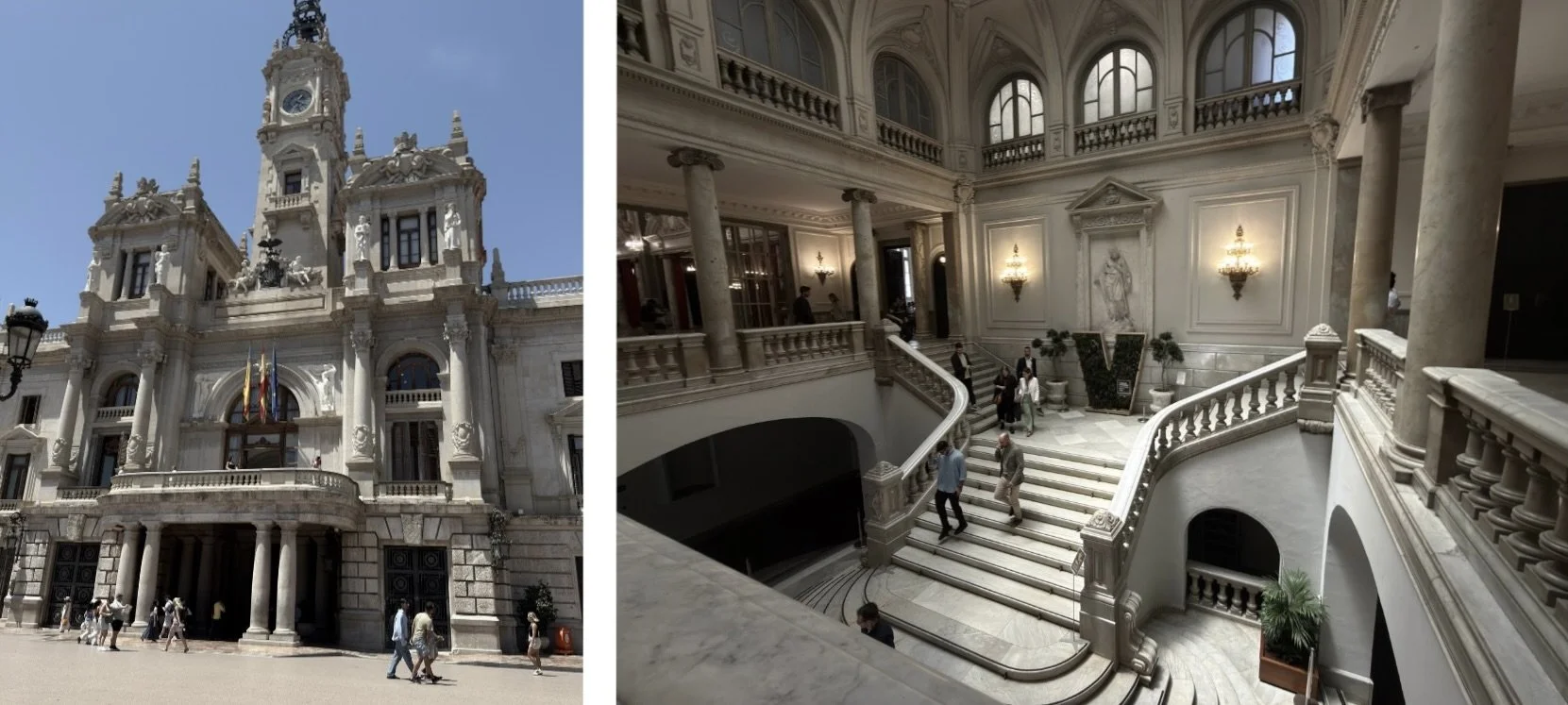
Exterior and interior of City Hall in Valencia. - photo by the author
But it wasn't just the age of things. It was how people were using the space.
The plaza wasn't a destination. It was just where people went. Old men talking on benches. A group of teenagers cutting through on their way somewhere else. Families. Couples. The fountain doing its thing in the middle of all of it, indifferent to whether anyone was watching. It was a gathering place that didn't require a reason to gather — the architecture just made it natural.
That's not how we build public space in the United States. American public space tends to have a purpose: a park for exercise, a plaza for a lunch break, a waterfront for a weekend. You're there for something. When the something is done, you leave. The idea of a space that exists simply for people to be in it, without agenda, without commerce, without the implicit pressure to move along — that's not a thing we build for. I’m sure there are some exceptions, but in Spain, it all felt like communal spaces were built to build community.
I've been trying to build it into my own days since I retired. Less technology, more presence. Slower mornings. Paying attention to what's in front of me instead of what's next on the list. It takes effort. I have to construct it deliberately, against a long habit of being somewhere else in my head while my body goes through the motions.
Standing on that balcony, looking down at the plaza, what I felt was not inspiration exactly. More like recognition. People were just living in a way I've been working toward, and it was built into the architecture of their daily life the way it isn't built into mine. They weren't practicing presence. The plaza was just there, and so they were in it.
We were in Mallorca the day before. Its Port de Sóller is a small port town, a harbor curving around calm water, cafes facing the water. I sat and watched the boats and the people and the simplicity of café dwellers sipping a cool beverage doing the same. It was a different feeling than Valencia — smaller, quieter, less grand — but the same quality of time. Unhurried. The afternoon just happening.
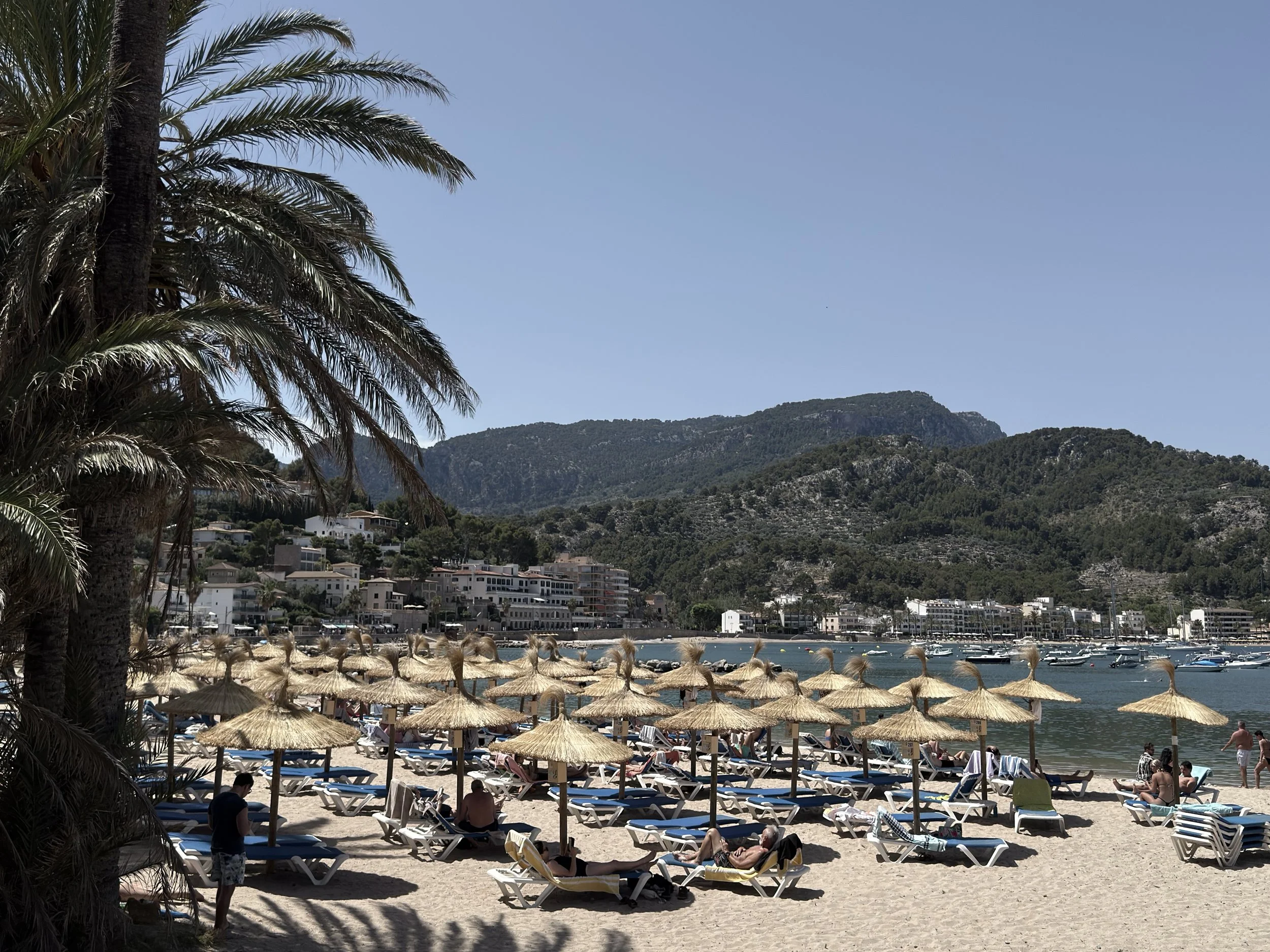
The beach in Port de Sóller, Mallorca. - photo by the author
Both Valencia and Mallorca provided so much beauty in nature, architecture and culture. It inspired me so much I was dreaming of sketching and drawing some of it.
I took a lot of photographs on this trip. The Valencia plaza from above, the gothic arches, the fountain. The harbor at Port de Sóller. I was trying to stay present — not sketching, not in my head, just there — but I knew even then that the photographs would eventually become something. A bridge back to what I am building for myself. Reference material and subjects I didn't have before I left to fuel new creative ideas.
Between pen & ink sketches with watercolor and digital sketching with photos, I have exciting projects ahead to relive what I felt in Spain. That feeling of space, connection, slower-paced living - it’s all worth memorializing in art!
Thanks for reading. If this one brought something up for you — a place you’ve been, something you’re building, a trip you’ve been putting off — I’d love to hear it. Leave a comment!
Talk soon,
Albert